


Contract management has evolved from being primarily an administrative activity to a strategic discipline that determines value creation, risk control and innovation.
Contemporary literature emphasizes that contract management requires an integrated approach in which formal structures, performance control and relational mechanisms reinforce one another (Poppo & Zenger, 2002; Cao & Lumineau, 2015).
This article therefore discusses five essential pillars of contract management and what it implies in practice.
Pillar 1: Organization and Governance
The first pillar is the organizational embedding of contract management. Research shows that organizations with clearly defined roles and responsibilities, and which explicitly position contract management within their governance structure, perform significantly better (Oxford Academic, 2025). A contract manager can only be effective when a clear distinction exists between the contract owner (who holds ultimate accountability), the operational contract manager (who handles day-to-day tasks), and the legal and financial advisors who serve as internal experts.
In practice, this means that organizations cannot rely on ad hoc approaches; instead, they must develop a formal governance framework in which escalation paths, decision-making rights, and communication lines are explicitly defined.
It is also necessary for organizations to periodically evaluate their own maturity in contract management. Maturity models, as developed in both public and private sector literature (NAVWAR, 2020–2023), provide a structure for identifying where improvements are needed. These models highlight whether contract management serves merely a tactical administrative function or whether it is embedded as a strategic instrument that adds value to the entire organization.
Wealth & Digital Trust Services
Protect, grow, and earn – with licensed wealth and digital trust solutions.
Wealth today extends beyond savings, shares, and property. Digital assets such as cryptocurrency and tokenized investments are increasingly part of modern portfolios.
Our Wealth & Digital Trust Services unite all your assets into a single, secure, and fully licensed trust structure designed to protect, manage, and grow your capital.
Read more →

Pillar 2: Contract Administration
A second crucial pillar is contract administration, often underestimated in importance. Gunduz et al. (2020) convincingly demonstrate that organizations that systematically and transparently record contractual obligations, amendments and invoicing perform better in terms of time, cost, and quality. Carter et al. (2024) reinforce this by showing that, in public projects, the degree of administrative accuracy directly correlates with the perceived quality of project outcomes.
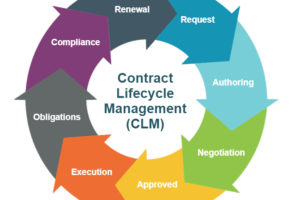
Practically, this means organizations must invest in setting up obligation registers in which all contractual commitments are systematically recorded. Equally important is standardizing change processes, as ambiguity regarding change management often leads to escalations and legal disputes. Digitization plays an increasing role here: contract lifecycle management (CLM) systems enable organizations to automate version control, monitoring and reporting. However, such digitization requires change in governance, since systems are only effective if employees integrate them into their daily workflows (Alqahtani et al., 2023). Contract administration is therefore not merely an archival function but a foundation for transparency and compliance.
Pillar 3: Performance Management
Where contract administration focuses on the past and present, performance management focuses on the future. It revolves around formulating, monitoring and adjusting the performance targets set out in contracts. Goo et al. (2009) demonstrate that well-designed Service Level Agreements (SLAs) not only make performance measurable but also foster trust and collaboration. This supports the idea that formal and relational governance can mutually reinforce each other.
For organizations, this implies that performance management must avoid becoming overloaded with indicators. Nudurupati et al. (2011) recommend working with a limited number of outcome-oriented KPIs that directly contribute to the organization’s strategic objectives. It is essential that performance measurement be part of a feedback cycle: measuring, learning and adjusting. Performance meetings should not become ritual reporting sessions but moments where contracting parties jointly reflect and agree on improvement actions. In some contexts, performance-based contracting (PBC) can be particularly effective. Alqahtani et al. (2023) shows that PBC can reduce costs without sacrificing performance, provided that output is measurable and fair risk sharing is guaranteed.
Pillar 4: Supplier Management
The fourth pillar concerns supplier management, often referred to as Supplier Relationship Management (SRM). Successful organizations go beyond transactions and invest in collaboration and supplier development. Nyaga et al. (2010) demonstrate that trust, joint efforts and information sharing lead to stronger operational and financial performance. Johnston et al. (2004) stresses that the supplier’s perception is equally important: when suppliers feel trust in the relationship, they are more willing to invest in quality and flexibility.
In practice, this means that organizations cannot treat all suppliers uniformly. Segmentation is essential: strategic suppliers require close collaboration and joint development programs, while transactional suppliers can be managed primarily through price and compliance. Organizing joint quarterly meetings—covering not only operational performance but also shared improvement goals—has proven to be an effective practice. In this way, supplier management becomes a lever for innovation and risk reduction.
Pillar 5: Relationship Management
The final pillar is relationship management, which lies in the art of combining formal contracts with informal relationships. Poppo and Zenger (2002) show that contractual and relational governance typically complement rather than substitute for each other. Cao and Lumineau (2015), in a meta-analysis, confirm that organizations that combine clear contractual arrangements with investments in trust, cooperation, and communication achieve the strongest results.
Relationship management therefore requires deliberate policy. ISO 44001 provides a framework that systematically anchors shared objectives, joint governance boards and exit strategies. From a strategic perspective, this links to the “relational view” (Dyer & Singh, 1998), which argues that sustainable competitive advantage arises from relation-specific investments and joint routines. In practice this means that relationship management is not a voluntary activity but a structured process through which organizations develop and maintain relational competencies.
Conclusion
The five pillars of contract management together form an integrated framework that enables organizations not only to manage contracts but also to leverage them as strategic instruments. Research shows that the success of contract management does not lie in any single dimension but in the balance and complementarity of all pillars. For organizations, this requires investment in both hard structures (governance, administration, KPIs) and soft mechanisms (trust, cooperation, relationship management). Only through such integration can contract management evolve into a source of value creation, innovation, and sustainable collaboration.
REFERENCES
- Alqahtani, F., Alaloul, W. S., Musarat, M. A., & Liew, M. S. (2023). The effectiveness of performance-based contracting in defense procurement. Defence Technology, 19(5), 1267–1279.
- Cao, Z., & Lumineau, F. (2015). Revisiting the interplay between contractual and relational governance: A qualitative and meta-analytic investigation. Journal of Operations Management, 33(1), 15–42.
- Carter, E., Hughes, J., & Allen, P. (2024). Contracting “person-centred” working by results: A mixed-method evaluation. Journal of Public Administration, 102(3), 421–439.
- Dyer, J. H., & Singh, H. (1998). The relational view: Cooperative strategy and sources of interorganizational competitive advantage. Academy of Management Review, 23(4), 660–679.
- Goo, J., Kishore, R., Rao, H. R., & Nam, K. (2009). The role of service level agreements in relational management of IT outsourcing: An empirical study. MIS Quarterly, 33(1), 119–145.
- Gunduz, M., Birgonul, M. T., & Ozdemir, M. (2020). Critical assessment of construction contract administration performance. Engineering, Construction and Architectural Management, 27(6), 1233–1255.
- International Organization for Standardization (ISO). (2017). ISO 44001: Collaborative business relationship management systems—Requirements and framework. Geneva: ISO.
- Johnston, D. A., McCutcheon, D. M., Stuart, F. I., & Kerwood, H. (2004). Effects of supplier trust on performance of cooperative supplier relationships. Journal of Operations Management, 22(1), 23–38.
- NAVWAR. (2020–2023). Contract management process maturity assessments. San Diego: Naval Information Warfare Systems Command.
- Nudurupati, S. S., Bititci, U. S., Kumar, V., & Chan, F. T. S. (2011). State-of-the-art review on performance measurement. Computers & Industrial Engineering, 60(2), 279–290.
- Nyaga, G. N., Whipple, J. M., & Lynch, D. F. (2010). Examining supply chain relationships: Buyer and supplier perspectives. Journal of Operations Management, 28(2), 101–114.
- Oxford Academic. (2025). Skills and knowledge for public contract management: A taxonomy and integrative framework. Public Management & Governance, 28(1), 15–34.
- Poppo, L., & Zenger, T. (2002). Do formal contracts and relational governance function as complements or substitutes? Strategic Management Journal, 23(8), 707–725.
- Mhlongo, T. M., & Chinomona, R. (2019). Supply chain partnership, collaboration and integration and performance in SMEs. South African Journal of Business Management, 50(1), a193.





Reageer op dit bericht